News - 01/30/2026
Perspectives in Advanced Pancreatic Cancer: Precision Oncology at the Hallwang Clinic

Pancreatic cancer remains one of the most aggressive and therapeutically challenging diagnoses in oncology. Through deep molecular profiling and innovative immunologic strategies, the Hallwang Clinic opens treatment avenues even in advanced stages of disease.
Pancreatic cancer (pancreatic carcinoma) is often diagnosed late due to its nonspecific early symptoms. By the time many patients arrive at a specialized center, they have already undergone multiple lines of therapy and are offered only palliative options. Surgical intervention is typically no longer feasible, and even modern chemotherapy regimens—such as FOLFIRINOX, gemcitabine/nab-paclitaxel, or newer combinations like NALIRIFOX—frequently provide limited and short-lived benefit.
As a dedicated center for personalized oncology, the Hallwang Clinic pursues a broader and more granular approach. Our goal is to understand the tumor’s molecular architecture with maximal precision and to identify actionable therapeutic targets—even when they fall outside conventional treatment pathways.
Why Genetics Is the Key: Beyond Standard Therapy
In many university cancer centers, molecular profiling is now part of routine diagnostics—but in practice, only a limited set of basic markers is evaluated. At the Hallwang Clinic, we go significantly deeper.
While standard-of-care regimens treat all patients largely the same, we now know that pancreatic cancers are biologically diverse. Through advanced Next-Generation Sequencing (NGS), we systematically search for oncogenic driver mutations that can unlock therapeutic possibilities far beyond chemotherapy. Importantly, previously collected tumor samples (archival tissue) can also be analyzed retrospectively to broaden diagnostic insight.
Our molecular diagnostics focus on precisely those therapeutic targets that current international research identifies as clinically meaningful and potentially actionable.
- KRAS-directed therapies (G12D / pan-KRAS): KRAS-dependent signaling pathways are of central interest, as mutations in this gene drive tumor growth in the majority of pancreatic cancers. Although KRAS was long considered “undruggable,” novel inhibitors against variants such as G12D—and emerging pan-KRAS approaches—are now entering clinical evaluation. When molecularly appropriate and clinically accessible, these agents can be considered as part of highly individualized therapeutic concepts.
- Claudin 18.2 (CLDN18.2) and TROP2: We also assess the expression of selected surface proteins, including Claudin 18.2 (CLDN18.2) and TROP2—promising targets for modern antibody therapies and antibody–drug conjugates (ADCs). These agents enable cytotoxic molecules to be delivered directly into tumor cells, thereby reducing systemic toxicity while intensifying local therapeutic impact.
- BRCA1/2 and PALB2: A further diagnostic priority is the evaluation of alterations in DNA repair pathways, especially mutations in BRCA1, BRCA2, or PALB2. These defects allow the principle of synthetic lethality to be exploited through PARP inhibitors, which selectively damage tumor cells with impaired DNA repair capacity. This provides a highly personalized and mechanism-based therapeutic route.
- NTRK Fusions: Finally, we systematically assess rarer but therapeutically significant molecular alterations such as NTRK fusions or microsatellite instability (MSI-high). These subgroups often demonstrate striking responses to immune checkpoint inhibitors in clinical trials and therefore open additional immunotherapeutic treatment avenues within a comprehensive precision-oncology strategy.
Many of these approaches are not yet approved in numerous countries but can be responsibly implemented at the Hallwang Clinic as evidence-based, individualized off-label therapies.
Breaking Through the Fortress: The Stroma Challenge
A defining feature of pancreatic cancer is its exceptionally dense stromal barrier—the so-called desmoplastic reaction. This fibrotic armor functions like a shield, preventing both therapeutic agents and immune effector cells from penetrating deeply into the tumor.
At the Hallwang Clinic, this biological obstacle is explicitly integrated into treatment planning. Our approach focuses on modulating the tumor microenvironment (TME). Through specialized pretreatments and combination strategies, we aim to increase stromal permeability—Tumor Penetration Enhancement—so that therapeutic agents can reach their intended targets in the first place.
A Synergistic Concept: Immun-Priming & mRNA Vaccination
Pancreatic cancer is classically categorized as an “immune-cold” tumor—poorly recognized by the immune system. As a result, monotherapy with checkpoint inhibitors is often insufficient. Our strategy is to “heat up” the tumor immunologically, making it visible and targetable.
A distinguishing feature of our treatment philosophy is a deliberately synergistic approach:
- Personalized Vaccination (mRNA & Peptides): We identify patient-specific tumor mutations (neoantigens) and develop tailored peptide- or mRNA-based vaccines designed to train the immune system to recognize tumor cells as foreign.
- Immun-Priming: This is paired with modalities—such as local hyperthermia, TACE, or low-dose radiation—that promote immunogenic cell death and enhance immune infiltration.
- Metronomic Therapy: Low-dose, continuous treatment regimens support immune function rather than suppress it, reinforcing sustained antitumor activity.
Real-Time Monitoring: Liquid Biopsy
Waiting months for the next CT scan can be emotionally burdensome—and clinically risky. For this reason, we integrate liquid biopsy as a dynamic monitoring tool.
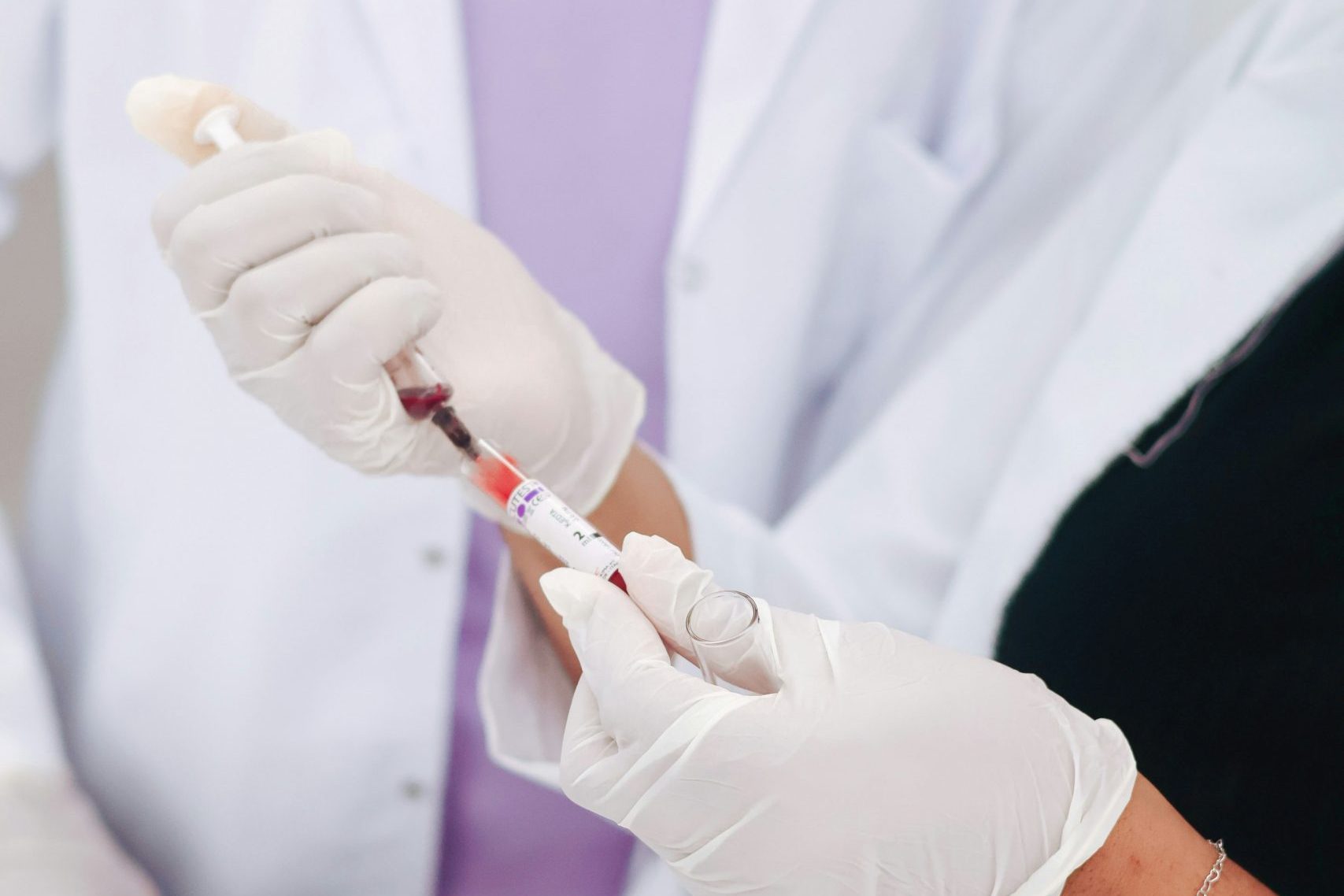
By measuring circulating tumor DNA (ctDNA) in the blood, we can often detect therapeutic response or emerging resistance weeks before imaging reveals any change. This allows us to adjust treatment proactively and avoid rigid adherence to a static protocol.
Your Pathway to Treatment at the Hallwang Clinic
The Hallwang Clinic has established one of the most advanced genomic and immunotherapy profiles internationally. Patients from across the globe come to us because we continue where standard guidelines often reach their limits.
We ensure comprehensive, continuous care:
- 24/7 access to the medical team
- No waiting lists – immediate case assessment and rapid therapy initiation
- International coordination with your physicians at home to ensure continuity of care
Do not lose hope. Even in advanced stages, there are opportunities to stabilize the disease, restore quality of life, and regain control. We guide you every step of the way—with expertise, compassion, and medicine at the highest level.